Flipkart - Search Bar

Friday, September 11, 2015

A Teacher's Day of Storytelling @ 'Easy Library, Hyderabad'


Another morning, this time it was a week before Teachers' Day. And so, as Teachers' Day was on schedule, the ‘Easy Library, Hyderabad’ decided to have a storytelling and a craft session, for the kids. It was called, ‘Dear Teacher, With Love’.

I had two teachers' stories with me, ‘The Gym Teacher from the Black Lagoon’ and ‘Miss Nelson has a Field Day’. So, I had kids who seemed fairly excited. Sports are different from classes, are they not? :)

Anyway, the first book, I read to the kids, was ‘The Gym Teacher from Black
Lagoon’ and it happened to be a book, which I thoroughly enjoyed. It spoke of a little boy, Hubie on his way to school. Hubie is pretty nervous, as he has to go for a gym class, with a new teacher, who would train the kids at school.

He is really scared, as he thinks that the teacher would look very huge, with green hair, all over his body and is known as 'Coach Kong'. He is also known for making the kids run around everywhere, and play weird games, like jump over a horse, or play dodge ball with his truck chasing after them, and actually ‘pick up’ the truck. Hubie is really worried about the entire set up…

Would he survive the class, and pick up the truck? Would he play ball and not run around the world? With these questions in mind, I read on. Author Mike Thaler and illustrator Jared Lee were responsible, for this book being a success.

We moved to ‘Miss Nelson had a Field Day’. In this one, we are introduced to lazy kids at school, who refuse to play football as they believe that they would lose, anyway. So, they never win a single game, that year.

Their coach falls sick with measles, and they have a new substitute teacher. Known as Miss Swamp, the substitute teacher puts them all in place. She trains them to kick, run around, and basically whipped to shape. Harry Allard is the author and James Marshall is the illustrator of this book! Incidentally, both author and illustrator are the same person, but he writes and illustrates with different names.

All the kids at ‘Easy Library, Hyderabad’ were jumping around and asking questions. And coming up with their stories, of how they would react to new teachers coming to class or sports teachers training them. A few stories on substitute teachers, too. 

The kids were excited and I kept remembering, what a weird time I had when I went to class, in all the different schools, I went to! Scary!!

And so, my session ended, and I was happy to turn the class over to a craft making session. This time, a greeting card making one, handled by Sasirekha Srinivas! They made some cool cards too, as you can see…

Wednesday, September 09, 2015

Author Interview : Anand Neelakantan, author of ‘Rise of Kali : Duryodhana's Mahabharata' (Part 1)


Anand Neelakantan

Anand Neelakantan has written the Interview of ‘Rise of Kali : Duryodhana's Mahabharata' with so much precision, that it becomes difficult for me to say anything beyond thanking him for it.

So, here's the Interview in which, he shares how he managed to change the ‘Gita’ into a discussion between Balarama and Krishna,  the growth between the first and the second books, the similarites and dissimilarites between Karna, Duryodhana with the lives of today, and the difference between a stand-alone book and a series. 

This is not all, and the Second Part is to come, next week. :)


‘Rise of Kali, Duryodhana’s Mahabharata’ was a brilliant book. The research seems tremendous. How can you tell the best parts, from all your research that you actually use in writing your book?

The book is part research and part imagination. It is reading between the lines, giving voice to the silenced and reimagining the story from the other side. The list of reference books is given in the last pages of the book.

How long did it take for you to research this book?

The book was researched along with ‘Asura’. I have been reading various versions of Ramayana, Mahabharata and other Puranas since my childhood.

It took almost 6-8 years of intense reading for ‘Asura’ and ‘Ajaya’ series.

You managed to change the ‘Gita’ into a discussion between Balarama and Krishna. It was a very well-placed read. How did you manage to touch upon the relevant factors and how was the experience? 
 
I approached ‘Gita’ like how a child with no religious prejudice would approach it. I kept asking more questions for every answer that ‘Gita’ is supposed to have. I was left with more questions at the end than I had started with.

What are your expectations from ‘Rise of Kali’, considering ‘Roll of the Dice’ did so well? 

Like any author, I also wish my book to be read by a large number of people.  I had put a lot of effort to research the subject and my heart and soul in writing it.  

Going by the reviews and sales so far, I hope this book will do better than my previous books.

What would you say is the growth of the characters, from the first to the second book?

The first book was just a set up. I was just setting up the tone and tenor of the book. In the second, every character undergoes a radical change.

In the first book, the princes from either side have not yet seen the world. They are young and impractical, swayed by the ideas of elders.
 
It is in the second, that they experience life up close. I have tried to bring the changes suitably.

How would you relate the life of Karna and Duryodhana to the lives of today? Any similarities or dissimilarities?

I bet everyone would have felt he has a Karna or Duryodhana in him. These characters are eternal. 

For the society’s sake, we will agree that Yudhishtra or Rama are the ideals and may be they are, but practically, we all are closer to Ravana, Karna or Duryodhana than we dare to admit. 


The entire ‘Ajaya’ (1 and 2) must have begun a long time ago. Could you describe the journey? How did it begin?

I had the wish of rewriting Ramayana and Mahabharata from the age of 14. 

Though I started writing ‘Asura’ at the age of 32 and completed it at the age of 38, and took another 3 years to complete the Ajaya series, these books have been always inside me for the past 26 years.

How different is writing a series compared to writing a stand-alone book? 

‘Ajaya’ was not meant to be a series. I had written it as a huge single book of 750 pages, but I felt I was not doing justice to the great epic. I decided to do it in two parts and it required rewriting the entire manuscript.

It would have been a commercially sound decision to have a one book. The problem with serialization for a counter telling is that it will not give a sense of completion to the reader if she or he reads only the first book. 

It took 18 months for the second book to come out and there is the problem of reader losing interest or forgetting the first part. I have tried to overcome this problem by giving a summary of first book in the second. 

I cannot presume that everyone who is picking up ‘Rise of Kali’ would have read ‘Roll of the Dice’. ‘Rise of Kali’ can be read as a standalone book also. Serialization works best with fantasy books.


You can Read the Reviews of 'Rise of Kali' here and 'Roll of the Dice' right here.
 
You can also Buy the Book here.


Monday, September 07, 2015

Book Review : 'The Magic Finger' by Roald Dahl and illustrated by Quentin Blake

From roalddahl.com
We are just a week away from Roald Dahl’s Day. And since, this year, I am going to do a few things related to dear ol’ Mr. Dahl on Sruti’s BookBlog. We are going to do a review this week, about ‘The Magic Finger’, then on September 13th, which is  next Sunday, which is Roald Dahl's Day, we are doing a storytelling on another one his books on Roald Dahl Day at Easy Library, Hyderabad. There are a few other secrets too... 

The Magic Finger
So, in this one, we have the review of ‘The Magic Finger’. First thing about Roald Dahl is, he makes me smile. :) So, when I firstly saw the book, it contained an illustration of a little girl pointing upwards, and with her finger all golden, as if to show a spark coming off it. So, I wondered how Mr Dahl and illustrator, Quentin Blake could get me laughing this time round. So, I read on…

The story begins with a little girl, who is eight years old, who lives on a farm. Her neighbours are eight year old Philip and eleven year old William, who live on the farm next door with their parents, Mr and Mrs Gregg.

All the three kids are good friends, except on Saturdays, when the Greggs, go hunting with their father.  Even the little boys have guns and they are off to shoot birds and animals. One Saturday, the little girl tries to stop the Greggs from going on their hunting trip. And they should have listened to her because she has a fairly big secret…

The little girl is the owner of a magic finger, which she almost never, intentionally uses. The magic finger is something which, she promises herself not to use, like she happened to, on her teacher, Mrs Winter.

Mrs Winter happened to ask her to spell cat, and the girl spelt it as ‘kat’, 
putting Mrs Winter in a temper. But poor Mrs Winter had no clue that the magic finger would be used on her. Mrs Winter ended up with whiskers growing out of her face and cats’ ears and a bushy tail. And the funniest thing is she never got better!

So, whenever the little girl gets mad, her forefinger begins to tingle and lo and behold, a spark comes out of it. She was so mad at the Greggs that she happened to use it on them, as well. She did not even know what would happen to the Greggs.

The Greggs come home that day with sixteen dead birds and four live ones, which refused to stop following them. They come home and go to sleep for the night, only to wake up in the morning with duck wings. Things move fast, as they discover they are meant to live as birds and be hunted down too!

By four huge birds, who have decided to take over their house, and everything in it! The best part is, the guns too have been taken over by the birds and the Greggs happens to see them, carrying and pointing them at the Greggs.

Quentin Blake
What would happen now? Were the guns to be used on the Greggs? The little girl, who is the owner of the magic finger comes in and discovers the whole scene, the next day…

It is a fun book, with all the lessons it had to teach the folks, who happen to take out guns and shoot at innocent creatures. It is very exciting, as you are compelled to turn the pages. One can see how the events unfold and how they work for the little girl and the ducks. It is an amazing story, and does the job for kids and adults, too.

The best part is not just the story, but the illustrations too. Quentin Blake does a superb job of them, as usual. You can see the spark on the little girl, the cat’s tail on Mrs Winter, the wings on the Greggs, and the gun holding birds and much more.

Because it never is a true Roald Dahl book without Quentin Blake’s work in it, is it? It will have you laughing and teaching the kids a little something too; this book does, doesn’t it? 

You could Buy the Book right here :)


Wednesday, September 02, 2015

Author Interview : Mohan Prasad, author of ‘Legacy' (Part 2)


Read on, the second part of the Mohan Prasad Interview. In this, he tells us what the most fulfilling part of writing 'Legacy' was, and also dishes out some advice to today's authors, and also gives us information on the next book, he has planned. He also tells us what he's reading currently and also his favourite authors, among others, Folks...


What is the most fulfilling part, now that you have written your book?

The most fulfilling part is seeing your work in front of you and in the hands of your near and dear ones. Getting appreciation from your colleagues really feels good. My favourite professor at IIT loved my book and could relate to the protagonist because her brother was an important part of Emergency protests. That really made my day.

One of my readers told me she is now keen to go back and read Indian history again, that seemed an accomplishment. It has also boosted my motivation to keep working on my other books.

Any advice to writers that would like to be published today? How tough is it to be published?

I have already mentored some budding writers. It is easy to empathize with them because I was among them only a few months ago. The advice I gave them is to be patient.

Mohan Prasad
Publishing can be really tricky, because it is a slow industry and editors, even though quite good at their work, might be wrong in assessing the value of your work.

Big publishers take their own sweet time to agree to publish your work and that is quite understandable, so at least for your first book you should be flexible with your publishing options.

Believe in your work, and it does help to get it edited professionally, because any work of artistry does need a neutral point of view.

Who was it that told you that you could become the author, you are today?

My brother. Though I was quite successful in most of my endeavours, I did need some encouragement for writing, because it can be a lonely pursuit at times.

My brother advised me to take a break from my professional career, drop my plans of a start-up and get on to writing, which was my real love. My family and friends believed in me, and in fact I also believed I could write well if I pursued it seriously.

What is the next book that you have planned?

My next book is on the Independence struggle. Two very important heroes (Subhash Chandra Bose and Indian National Army, as well as the 1857 mutiny by Nana Sahib are the major events discussed and compared along with their build ups and impacts. The characterisation is very novel to give it the look of fiction while keeping readers amused and interested.

Which book are you currently reading?

I have recently completed two books by Ashwin Sanghi : ‘The Krishna Key’ and ‘The Rozabal Line’. I am currently reading '20 Indian Innovators' by Akshat Agrawal and a collection of Russian short stories.

Who are your favourite authors and why?

Premchand, Malcolm Gladwell, Gabriel Garcia Marquez, Salman Rushdie, Amitava Ghosh, Orhan Pamuk and UR Ananthamurthy, among many others. Most of them have dealt with the socio-political aspects of their regions quite vividly.

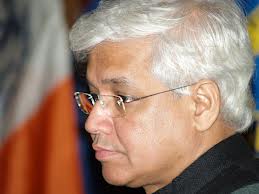
Amitava Ghosh
Premchand was probably India’s greatest writer, though he tends to make you sad. Ananthamurthy was a modern master, more deserving of the Nobel Prize in Literature than many others. Amitava Ghosh for his details and his selection of topics, while Marquez for his amazing fantasies that depict reality better than the reality itself.

What else do you do on a daily basis? 

I work full-time in education management, which is a passion. Reading is also more of passion than hobby and takes a lot of time.

I aspire to be an impactful social entrepreneur and I do take some small steps in that direction on and off.

What addtional advice do you have for people who are trying to debut, as well?

We all have artists and writers inside us. Some of us may be great with words, others may be great with performances or may be none of these.

But we all have stories to share and we all are moved by human stories, even though our preferred genre might vary. So, when you decide to write, I would just advise them to try to touch meaningful topics. We are the citizens of a vast land with a very rich culture and infinite stories covering all emotions. We need thousands of pens to bring those forth. Be a proud part of it and be true to your writing.


You can read the First Part of this Interview right here. You can also catch the Review and also Buy the Book right here.